
First gen college student attends Ivy MBA
How he pivoted from logistics and ops roles in retail and pharma to consulting to satisfy his expansive interests and deep intellect
Want to design a pivot like this?
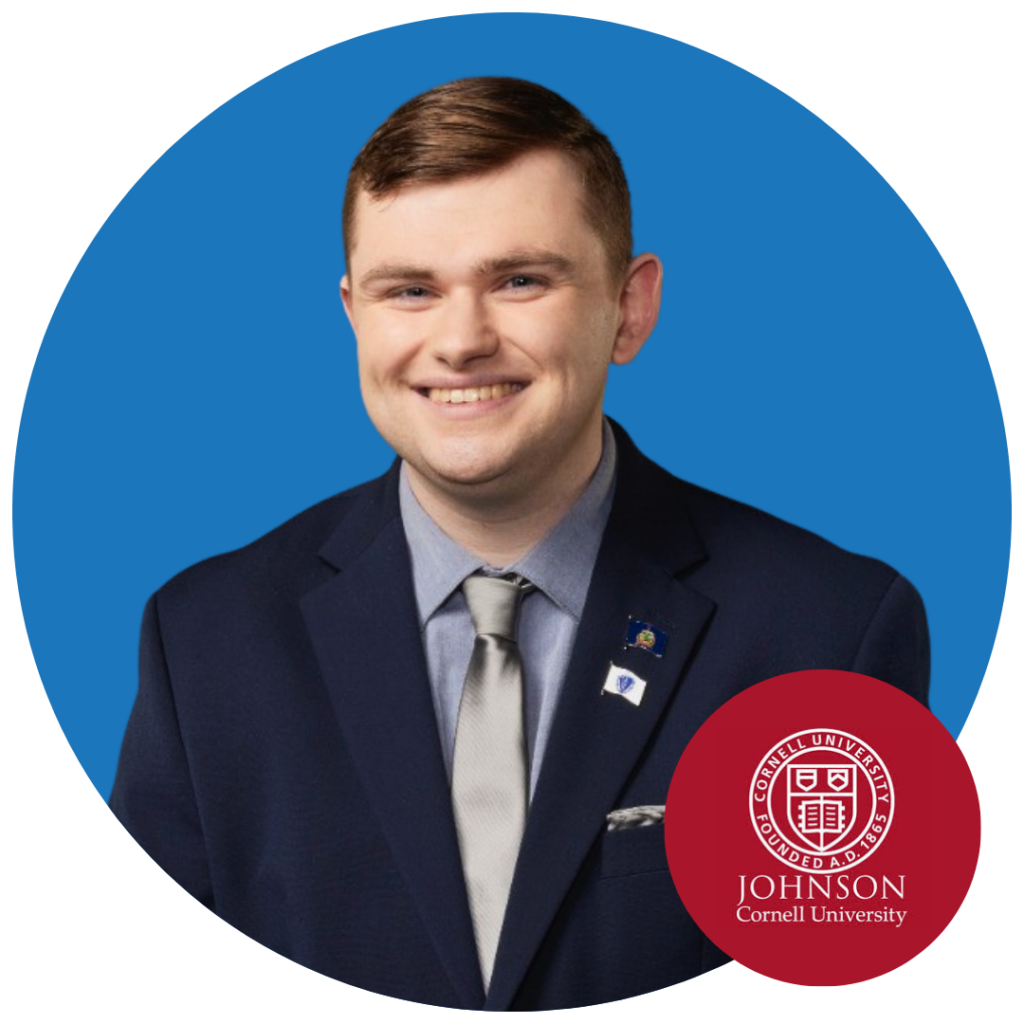
Before MBA Protocol
I have worked in logistics in retail and pharma/bioscience spaces for five years. Though I have been successful in my roles, and even earned a promotion in the retail space, I found different issues with both companies. In the retail space, I grew fatigued from corralling delivery drivers, working weekends and repetition routing deliveries, so much so that I had to take a leave of absence to tend to my mental health, despite generally enjoying my coworkers and the company’s atmosphere.
More recently in the pharma space, I found no career ladder, a stagnant salary structure as well as unethical and unnecessarily complex systems that made my job exponentially more difficult. On top of that, turmoil within the company meant that my success was often overlooked and underappreciated by people in charge.
I worked with a career counselor and aptitude test company in early 2024, which uncovered a faculty with retaining numerical information that I had not thought out prior, concerns about my financial future and life satisfaction if I could not make a change, and a desire to work with intelligent colleagues on more complex or creative problems that require in-depth thinking.
Why MBA, why now
I explored some analytics certification programs in early 2024 and tried some open source materials to get a feel for what I would need to learn to market myself. However, I struggled staying focused and determined that I would need to formally return to school to work in a program with the resources and structure I needed.
I first considered an MBA after an exit interview with the retail company, where my colleague in the HR department mentioned her MBA, which allowed her to take on some new opportunities and ultimately settle on HR long-term. After conducting research, I decided to pursue my own MBA after seeing the flexibility I could have with the degree.
…for someone who has struggled for years to decide on a career path due to a wide variety of interests, a degree with flexibility sounded like a perfect fit.
Why MBA Protocol
I previously applied to MBA programs in the 2024-2025 cycle, completely on my own and without knowledge of what I was getting into. The results were disastrous, and I took a free consultation meeting with another well-known firm once I decided to reapply in the 2025-26 cycle to try and nail down specific areas that most needed my attention. While the meeting was productive, the price point and personality of the consultant did not match what I was looking for. I felt like just a resume to her.
I remembered watching Angela’s YouTube videos at some point previously, and found them fun, informative but also supportive. Angela was kind enough to jump on a free call with me, and opened the conversation by asking about a non-work item on my resume that she found impressive before reaffirming the previous consultant’s advice (that I was a candidate for a top program with a little extra care). The LFG program’s cost fit my budget as well as the services I required – something more self-paced with the option to schedule one-on-one sessions as I needed them.
The work we did together
Generally speaking, I tend to not shy away from tackling big goals. Even though my confidence wavered at times, I never stopped believing that I deserved entry to a top program. With MBA Protocol, I found not only supportive coaches who agreed and reinforced my beliefs, but also a team of other prospective students who cheered me on along the way. Having hit my goal of attending a top program, I feel greater confidence that I can successfully recruit for a top firm as long as I follow the structure of the program and seek out resources when I need them, just as I did through MBA Protocol.
I have always struggled feeling “normal” about networking, and I think the community aspect of MBA Protocol has helped me feel more at ease in that regard.
I just returned from an admitted student weekend at Cornell Johnson, where I noticed I could more comfortably introduce myself to someone new, talk about my background and my more defined post-MBA goals having done that for months through Protocol’s weekly check-ins.
What the MBA Protocol Coaches Brought
As a member of MBA LFG, I did not have one direct coach and worked with several members of the team. All played integral parts of my process.
Charli recommended I look at schools that were not on my board previously, namely Cornell Johnson. This observation turned out to be prescient as I was admitted and later accepted an offer of admission to attend.
Heather provided a caring shoulder during a difficult personal period right before Round 1 deadlines, helped look over my essays and fine tune them all, and we “slow-walked” my application on a call at her request so she could learn more about me. She truly approached me as a colleague and friend by reinforcing, and sometimes rebuilding, my confidence when I needed it. She saw in me what Angela, myself and others had – that I was good enough. Heather even talked like my wingman at a bar when my top choice rejected me, saying Cornell would be a better fit anyway (which she was correct about, unsurprisingly).
I also worked briefly with Brian on two calls about my resume and test prep. Both produced tangible results (better looking resume and higher test score), but the fact that he was kind enough to reach out with congratulations when he learned of my acceptance to Cornell speaks to his character and will stick with me beyond the program.
MBA Admission Results
In 2024-2025, I was rejected at MIT, Harvard and Dartmouth, with admits to lower-ranked part-time programs in Boston College, Boston University and Northeastern.
In 2025-2026, my test scores went up. This put me within the median range at every school I applied to, six in total.
While I was rejected once again at Harvard and MIT without an interview, I did get an in-person interview at Dartmouth this time, and ultimately two admits from Georgetown and Cornell, the latter of which I accepted. There was an issue with my application to Carnegie Mellon and I turned down their invitation to interview, but I felt confident I would have converted that to an admit as well.
I grew up in rural Vermont and was the first in my family to graduate college. The average Cornell Johnson graduate earns three times my current salary.
The Ivy League felt like a place that existed in imagination only, no matter how successful or impressive my resume, and that I would have to settle for smaller programs in the region. Thanks in no small part to MBA Protocol, I am on the precipice of making this imagination reality. To say that I am ecstatic about the results would be the understatement of the century.
Her advice to other pivoters
- Everything that has happened to me over the past ten years has come as a result of hard work.
- Be confident in yourself and your ability to do challenging things.
- Do not put pressure on yourself to figure out your career in a day. I still don’t know what I want to do with my life, but I am a lot closer than when I started.
- No one is great entirely on their own. Invest in yourself if you need some clarity, take an aptitude test, hire a career coach, and work with MBA Protocol.
Seek help when you don’t know the answers and listen to people with experience. Work together to develop an action plan and stay diligent following it.
And perhaps self-effacingly, if I can do all this, so can you.

Jake’s Success Statistics
- Cornell MBA, Class of 2028!
- Admits: Cornell and Georgetown
- Pre-MBA: 5 experience in retail and pharma in ops roles
- Post-MBA goal: Management Consulting
- Test: 317 GRE