

Are MBA Alternatives Worth It?

If you’ve been thinking about an MBA but something doesn’t feel fully right, you’re not alone.

For some people, it’s the cost. For others, it’s the time commitment. And for many, it’s the uncertainty of whether the outcome will actually justify the investment.

The reality is that an MBA can be a powerful tool, but it’s not the only way to get where you want to go.

In many cases, you can build the same core benefits in a different way. More flexibly, more quickly, and at a much lower cost.

This guide is here to help you understand what those alternatives look like, and how to approach them in a structured way.

Table of Contents

MBA Alternatives: How to Get the Same Value Without a Traditional MBA

Why consider an MBA alternative?

An MBA is designed to do a few specific things well.

It gives you structured business knowledge. It expands your network. And it creates access to certain types of roles, but it also comes with trade-offs.

It is expensive. It takes time away from work. And it does not guarantee a specific outcome.

If your goals do not require all three of those benefits at once, it can make sense to look at alternatives.

This is especially true if you:

  • want to learn faster and more directly
  • need flexibility alongside your current role
  • already have some level of network or experience
  • prefer to build through action rather than stepping away

The key here is to understand what you actually need, and then build that intentionally.

The three core benefits of an MBA

Before looking at alternatives, it helps to break down what an MBA is really providing.

Most of the value comes from three areas.

First, education. This is the structured learning across finance, strategy, operations, and leadership.

Second, network. This includes both the immediate peer group and the longer-term alumni connections.

Third, access to opportunities. This is where the MBA often has the strongest impact, especially through recruiting pipelines.

Once you separate these out, the path becomes clearer.

Because you can start to ask:

Which of these do I actually need?

And how can I build that directly?

How to replicate MBA education

If your main goal is learning, this is the easiest part to replace.

There is no shortage of high-quality material available. Start with a small number of strong business books that give you a broad foundation.

Then layer in structured courses that help you go deeper in specific areas like finance, strategy, or marketing. The important part is not consuming everything.

It is choosing a few high-quality inputs and actually applying them. That might mean working on a real project, contributing to a small business, or testing ideas in your current role.

Learning becomes much more valuable when it is tied to action.

Building a network without business school

This is the part many people feel unsure about.

An MBA gives you a built-in network. Without it, you have to be more intentional. But that does not mean it is out of reach.

You can build a strong network by:

  • attending industry events and conferences
  • joining professional communities
  • engaging meaningfully on platforms like LinkedIn
  • reaching out for conversations, not just opportunities

The key difference is that you are creating the network yourself.

It may take more effort, but it can also be more targeted and relevant to your goals.

Creating opportunities outside the MBA funnel

One of the biggest perceived advantages of an MBA is access to jobs.

But even here, there are alternative paths.

You can create opportunities by:

  • building a portfolio of real work
  • reaching out directly to companies you are interested in
  • participating in competitions, projects, or collaborations
  • developing a visible personal brand in your field

Instead of waiting for structured recruiting, you are positioning yourself proactively.

This can feel less predictable, but it can also be more aligned with what you actually want.

Want to join a free community with tools? 🛠️

If you’re trying to figure out whether you need an MBA or an alternative path, but you keep going back and forth, this is exactly the kind of decision that benefits from structure.

The MBA Momentum Club is a free, structured community designed to help you get clear on your direction before you commit to a major decision.

Instead of relying on scattered advice, you work through your goals, your options, and your next steps in a way that actually moves you forward.

You’ll also get access to tools and guidance that help you compare paths and build a plan that fits your situation.

Join the MBA Momentum Club today. We’d love to have you in there.

Building confidence without an MBA

One of the less obvious benefits of an MBA is confidence.

Not just from learning, but from applying that learning and seeing results.

You can build that same confidence through a combination of:

  • gaining knowledge
  • applying it in real situations
  • getting feedback and refining your approach

Over time, this creates the same sense of capability that many people associate with business school.

The difference is that you are building it in your own context.

How to decide if an MBA alternative is right for you

This comes back to alignment.

Ask yourself:

  • Do I need structured recruiting access, or can I create opportunities directly?
  • Do I need a broad reset, or just specific skills?
  • Is the investment justified by the outcome I am aiming for?

If your answers point toward flexibility, targeted learning, and self-directed growth, an alternative path may be the better fit.

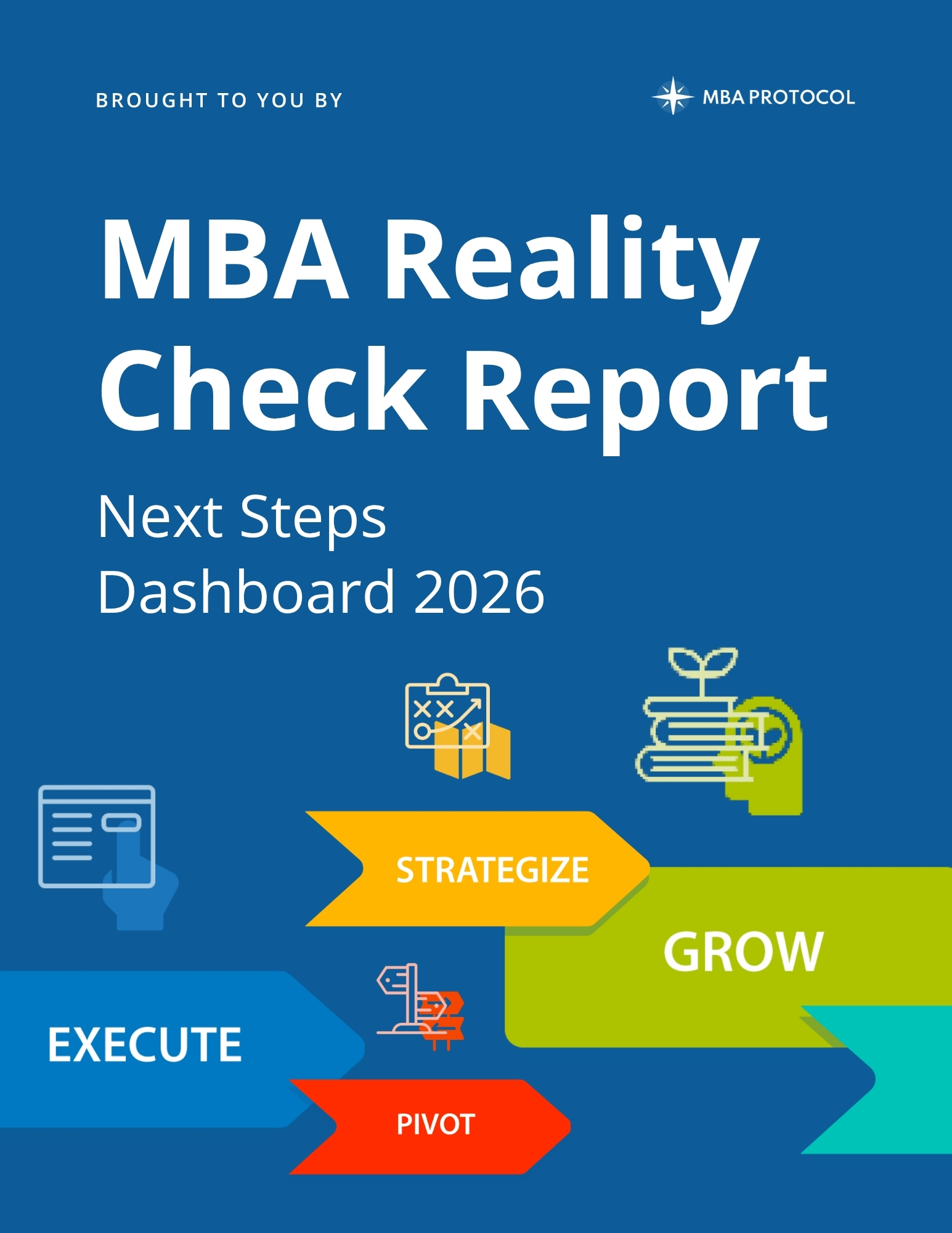
If they point toward structured transitions, brand, and access, an MBA may still make sense. In this case, you can take our MBA Reality Check Quiz to see where you stand in the timeline of applications.

The goal is not to choose the “better” option.

It is to choose the one that fits your situation.

Final thoughts

An MBA can be a powerful accelerator.

But it is not the only way to build a strong career.

If you are thoughtful about how you approach learning, networking, and opportunity creation, you can achieve similar outcomes on your own timeline.

What matters most is not the path itself. It is how deliberately you move through it.

Frequently Asked Questions

What are the best alternatives to an MBA?

The best MBA alternatives include business books, online courses, professional certifications, networking, and real-world projects that build skills and credibility without the cost of a full degree.

Can you get the same value as an MBA without going to business school?

You can replicate much of the value by focusing on education, networking, and opportunity creation, though structured recruiting access is harder to replace.

Are MBA alternatives cheaper than a traditional MBA?

Yes, most alternatives cost a fraction of an MBA, often ranging from a few hundred to a few thousand dollars instead of $200,000 or more.

Do employers respect MBA alternatives?

Employers value demonstrated skills, results, and experience. A strong portfolio and clear impact can often outweigh formal credentials.

How long does it take to replace MBA-level knowledge?

With focused effort, you can build a strong foundation in 3 to 6 months, especially if you combine learning with real-world application.

Is networking without an MBA harder?

It requires more initiative, but it can be just as effective if you are intentional about building relationships and engaging in the right communities.

How do I know if I should skip the MBA entirely?

If your goals can be achieved through targeted skills, experience, and networking without needing structured recruiting or brand signal, an MBA may not be necessary.

Where can I get help deciding between an MBA and alternatives?

The MBA Momentum Club helps you compare both paths, clarify your goals, and build a structured plan so you can move forward with confidence.

Picture of Angela Guido

Angela Guido

Student of Human Nature| Founder and
Chief Education Officer of Career Protocol

All Posts

More Like This