

Trying to decide whether to apply to business school can feel surprisingly difficult; partly because there is so much noise around the decision.
Economic uncertainty, layoffs, AI disruption, changing recruiting markets. It becomes easy to focus on what is happening around you instead of what actually matters for your own path.
But MBA timing is personal.
And in most cases, the right decision comes down to a few clear questions.
This guide is designed to help you think through those questions in a structured way, so you can decide whether 2026 is the right year for you to apply.
Table of Contents
Video version
Why this question matters (even if the economy feels chaotic)
A lot of applicants make MBA decisions reactively.
They apply because the market feels unstable, because other people are applying, or because they want a break from uncertainty.
But business school works best when it is tied to a clear goal, not a temporary emotion.
The stronger your reason for pursuing an MBA, the easier it becomes to evaluate whether the timing is right.
That is why this decision should come from your situation, your ambitions, and your long-term direction, not from headlines.
Decision tree overview – the three questions that matter most
- Is this the right stage in your career?
- Does an MBA clearly support the future you want?
- Are you applying with the strongest possible profile?
If you can answer those honestly, the decision becomes much more manageable.
Question 1: Is this the right time in your career?
One of the biggest misconceptions about MBA timing is that it is purely about years of experience.
It is not.
What matters more is whether you have built enough professional foundation to actually benefit from the experience.
A useful way to think about this is to ask:
- Have I learned a meaningful amount in my current role?
- Am I still growing at the same pace?
- Would staying another year provide substantial and materially different experiences?
For some people, the answer is yes.
Others will have clearly maxed out their learning curve in the present environment.
That is often when the MBA becomes valuable.
Full-time, part-time, or online?
The format matters more than many applicants realize.
A full-time MBA tends to make the most sense for people pursuing a major transition or immersive reset.
Part-time works better for professionals who want to continue progressing while studying.
And online formats can make sense if flexibility is the highest priority.
The right format depends on what you are trying to achieve, not just what sounds most prestigious.
Question 2: Does an MBA align with your post-MBA goals?
This is where a lot of applications become vague.
People say they want “growth” or “leadership,” but they have not translated that into a clear target.
The more specific your goal becomes, the easier it is to evaluate whether an MBA actually supports it.
For example:
- Some schools are particularly strong for consulting
- Others are stronger for finance, VC, entrepreneurship, or tech
- Geography also matters
A highly targeted goal usually requires a more strategic school list and stronger candidacy.
A broader goal gives you more flexibility.
Understand what your target role actually requires, then choose.
Prestige vs alignment
Rankings prestige alone is rarely enough.
A school becomes valuable when it connects directly to the outcome you want.
That might mean:
- strong alumni presence in your target field
- recruiting pipelines into specific companies
- regional strength in a particular geography
- or a culture that fits how you want to grow
The best MBA is not automatically the highest-ranked one.
It is the one that creates the strongest bridge between where you are and where you want to go.
PSA: My team and I can help you decide in our free community
If you’re trying to figure out whether 2026 is the right time to apply, but you keep getting stuck between research, rankings, and conflicting advice, this is exactly the kind of decision that benefits from structure.
The MBA Momentum Club is a free, structured community designed to help you clarify your goals, assess your profile, and build a realistic MBA strategy.
Instead of piecing together scattered information, you work through the decision in a way that actually creates momentum.
You’ll also get access to tools, guidance, and support that help you move forward with more confidence.
Join the MBA Momentum Club today. We’d love to have you in there.
Question 3: Are you as competitive as possible?
This is the part many applicants avoid.
Not because they are weak candidates, but because it requires honesty.
Strong MBA applications are built on a combination of factors:
- academic readiness
- career progression
- leadership
- communication
- and overall clarity of direction
Sometimes the smartest decision is not “apply immediately.”
Sometimes it is giving yourself another year to strengthen your profile properly.
That could mean:
- improving your GMAT or GRE
- gaining stronger leadership experience
- clarifying your career goals
- or building more measurable impact at work
Waiting is not automatically a setback.
It can improve both admissions outcomes and long-term ROI.
Tools and resources to speed up your decision
You do not need perfect certainty before moving forward, but it helps to have structure.
That might include:
- researching realistic post-MBA outcomes (grab our free in depth career report as a starting point)
- speaking with alumni or current students
- comparing program formats carefully
- pressure-testing your career assumptions
The clearer your thinking becomes now, the stronger your decisions will be later.
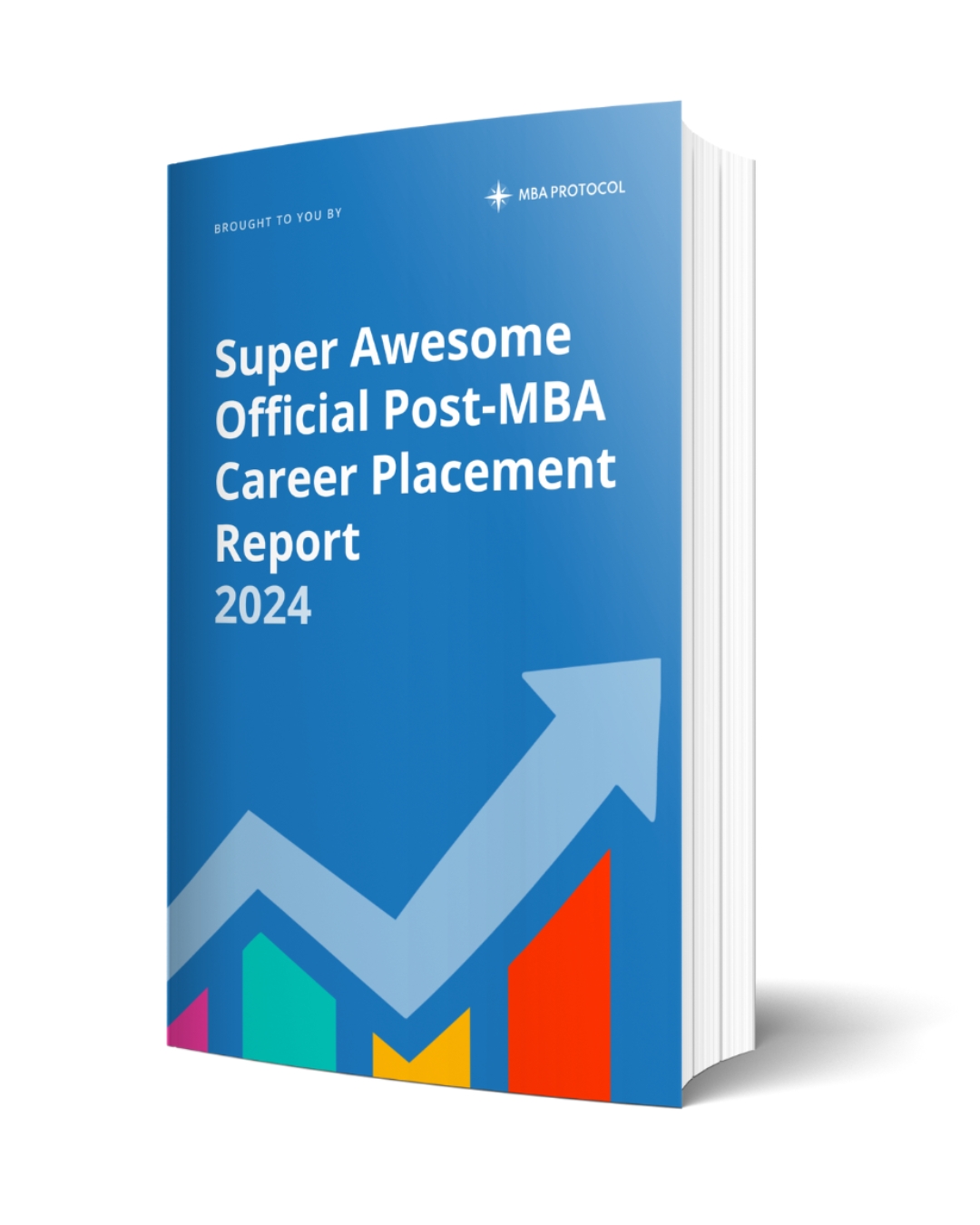
Unlock Your MBA Career Potential with Our FREE Career Placement Report
Explore career outcomes from the top 30 MBA programs. Discover which schools align with YOUR goals—and take the first step toward YOUR dream job.
Final verdict – apply in 2026 or wait?
There is no universal answer to this question.
But there is usually a clear answer once you look honestly at:
- your current trajectory
- Your short- and long-term goals
- your readiness
- and the role an MBA would actually play in your path
If the MBA clearly bridges to your goals and your profile is ready, 2026 could be your year.
If not, wait strategically and build.
The key is making the decision based on you, not on the market.
What to do next (if you decide you need one)
If you reach the point where an MBA makes sense, the next step is to get specific.
That means defining your target role, understanding which schools lead to that outcome, and building a focused application strategy.
It also means starting early.
Speaking to alumni, understanding recruiting pipelines, and shaping your story all take time. The clearer your direction, the stronger your application will be.
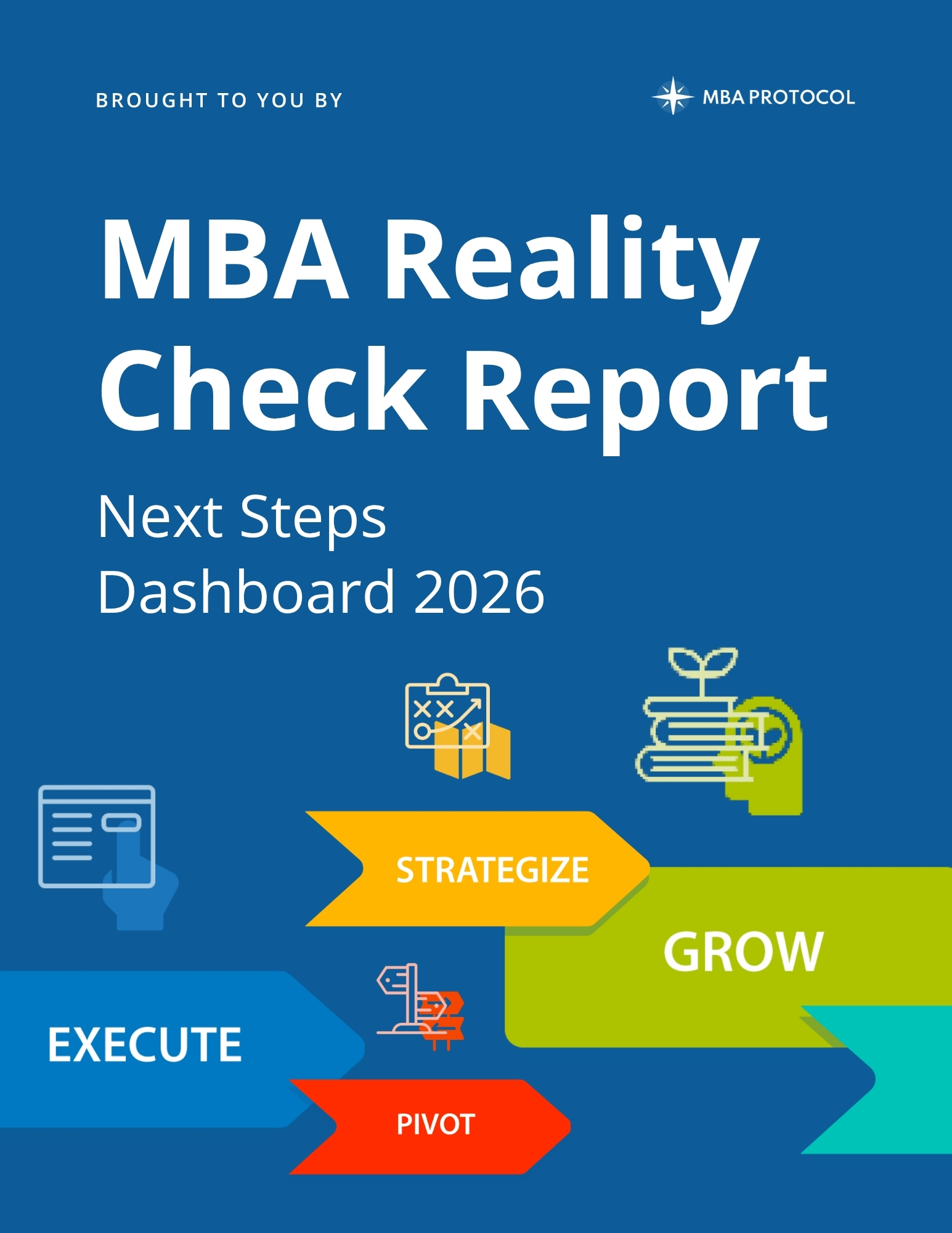
Additionally, you can take our MBA Reality Check Quiz to see where you stand in the timeline of applications.
Frequently Asked Questions
It can be, depending on your career goals, readiness, and how clearly an MBA supports your next step.
You should have meaningful work experience, clear post-MBA goals, and a strong reason why an MBA is necessary for your trajectory.
Waiting can make sense if you need stronger leadership experience, clearer goals, or improved test scores before applying.
Admissions teams evaluate career progression, leadership, academic readiness, impact, and clarity of direction.
Rankings matter, but alignment with your target industry, geography, and career goals is often more important than prestige alone.
The right format depends on your goals, financial situation, career stage, and whether you need a major career transition.
Yes, especially if you can demonstrate leadership, impact, and a compelling reason for pursuing the MBA.
The MBA Momentum Club helps you assess your readiness, compare options, and build a structured MBA strategy before applying.
Angela Guido
Student of Human Nature| Founder and
Chief Education Officer of Career Protocol
More Like This

You Probably Don’t Need an MBA. Here’s Why
Not everyone benefits from an MBA. Learn who should pursue one, who may not need it, and how to evaluate the investment against your long-term career goals.

Are MBA Alternatives Worth It?
You don’t need an MBA to grow your career. Learn practical, lower-cost ways to build business skills, expand your network, and create new opportunities without business school.
Does an MBA Still Deliver ROI in 2026?
Is an MBA worth it in 2026? Learn how to evaluate MBA ROI, avoid costly mistakes, and decide whether the investment aligns with your long-term career goals.
Who Really Needs an MBA? 6 Types of Applicants Who Should Consider It
An MBA is not for everyone, but for the right candidates it can accelerate career growth. Discover the six applicant profiles that benefit most and whether the investment fits your goals.

Is An MBA Worth It? How To Calculate The Real ROI
Thinking about business school? Learn how to calculate the real ROI of an MBA—costs, salary, boost, risks, and the intangibles that actually make it worth it (or not).

Is an MBA Worth It in 2024?
The highest quality MBA resources you’ll find this month. (Jonny’s MBA Bulletin, March 2024)